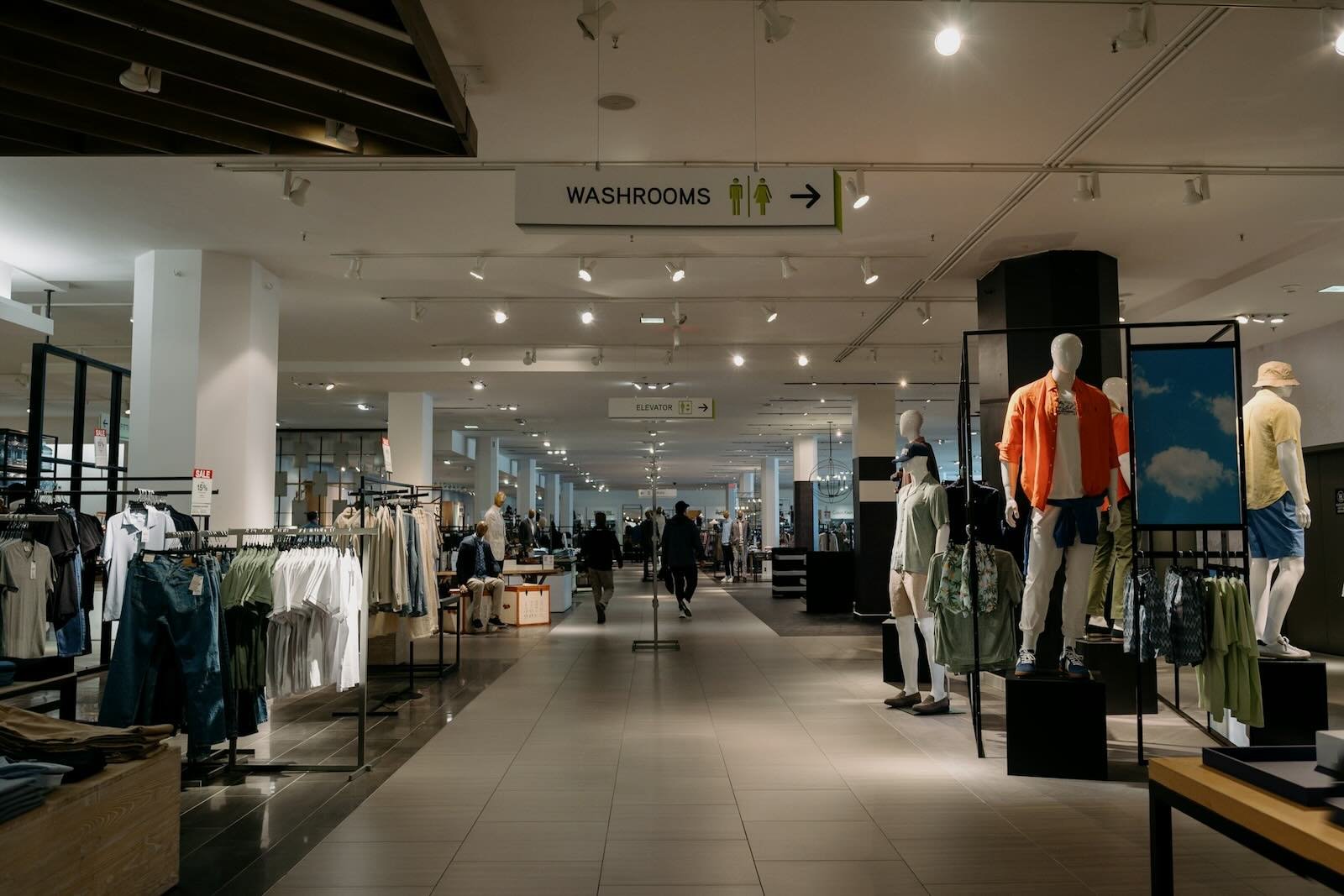
Who fills the department store void?
Simons, Stripes, and the slow rebuild of Canadian retail
When Hudson’s Bay closed its doors for good in June 2025, Canada lost more than just a familiar name. It lost a company older than the country itself, and arguably the last full department store still standing here. Sears Canada is gone, Eaton’s is gone, and Zellers now exists only as a nostalgic section within Hudson’s Bay Company. What Hudson’s Bay leaves behind isn’t just an empty building; it’s a shopping category that no one has quite figured out how to replace: a curated range of home goods, including bed and bath, under one roof. Where do Canadians buy bedsheets and towels these days?
A year later, the picture is beginning to emerge, slowly and from multiple angles.
Simons is expanding, carefully
While most news about department stores since 2025 has focused on closures, Simons has quietly been expanding. The Quebec City-based retailer recently confirmed a 92,000-square-foot flagship store at CF Pacific Centre in downtown Vancouver, opening in fall 2027. This marks Simons’s first store in the downtown core and its second in British Columbia, following its long-standing Park Royal location in West Vancouver.
The new store occupies a space with a rich history. It was once home to Eaton’s downtown Vancouver store, then Sears, and finally Nordstrom, which vacated the site in 2023. The space is now being divided into separate units, and Simons will share it with a new 40,000-square-foot Aritzia flagship, both of which are also scheduled to open in fall 2027. This development sees two homegrown retailers entering a space with a direct lineage through three department-store eras: Eaton’s, Sears, and Nordstrom. Each of these retailers, at different times, faced the same challenge that Hudson’s Bay’s recent exit has reignited.
While Simons isn’t a direct replacement for Hudson’s Bay, it leans more towards fashion and design than general home goods. Nevertheless, its expansion signals a strong indication that the physical department-store format still has a future in Canada, even as it continues to shrink in other regions.
What happens to the buildings themselves
Hudson’s Bay’s historic flagships are being evaluated individually, and the outcomes vary significantly by city. In Vancouver, the iconic building at 674 Granville Street, with its heritage-protected facade, has sold to Onni Group for $112.5 million. While no official plans have been announced for the site, redevelopment experts suggest a mixed-use development. This would include a hotel, office space, and residential units, all layered alongside some retail. Notably, the historic structure would remain intact rather than being demolished. This is a far better outcome than some other former Bay buildings, such as Toronto’s Yonge and Bloor location (below the recent HBC headquarters and NOT the historic building connected to CF Eaton Centre), which is currently under consideration for self-storage.
It’s a peculiar form of consolation: the building that once sold duvet covers might eventually become a place to stay during a Vancouver trip. However, preserving the shell of this significant heritage-protected building is a positive outcome compared to the fate of most of Hudson’s Bay’s real estate.
Canadian Tire's answer: revive the name, not the store
Canadian Tire’s most surprising move is its acquisition of Hudson’s Bay’s intellectual property—the name, coat of arms, and stripes—for approximately $30 million in 2025. Following a holiday season of reissued classic designs, the company has now launched its first in-house-designed collection under the Hudson’s Bay Stripes name. This summer collection features 32 pieces, including the historic Point Blanket, outdoor furniture, a pickleball set, a Muskoka chair (also known as an Adirondack chair... but that's not very Canadian), and towels. Several items are made in Canada, including a cedar strip canoe.
While this acquisition is significant, it’s not a department-store solution. It’s a curated seasonal product line available exclusively at Canadian Tire and Mark’s, rather than a standalone bed-and-bath destination. However, it demonstrates the continued commercial interest in Hudson’s Bay’s heritage. Interestingly, the stripes may even outlive the department store they originated from.
Nobody's quite closed the gap yet
When you put it all together, the picture is this: Simons is expanding into department-store-like spaces, but with a focus on fashion. Canadian Tire is reviving the Hudson’s Bay name, but as a product line rather than a physical store. Meanwhile, the old flagship buildings are being repurposed for hotels, offices, and even storage units. None of this aligns with Hudson’s Bay’s original concept: a single store offering a curated selection of home goods, like duvets and towels. Amazon can sell these items, but it doesn’t offer the same personalized experience or the thrill of browsing a physical home department store. For now, this gap in Canadian retail remains, which is worth remembering the next time you’re searching for a specific item at a store.
Photo by Albert Stoynov on Unsplash